

Put enough talented people in the same room, and you should have a high-performing team. That is the assumption. Rory Underwood MBE has spent enough time around exceptional performers to know teams do not work that way.
Across international rugby and 18 years serving in the Royal Air Force — including flying fast jets — Rory has seen highly capable individuals perform very differently depending on their environment. At the time of the conversation, he described around 25 years advising organisations, including 17 through Wingman, the leadership consultancy he founded and leads as CEO.
Talent matters, but building a high-performing team depends more on creating the conditions in which good people can perform exceptionally well — and do so consistently.
In his conversation with Brij Thankey on Unfiltered with Brij, Rory explains what those conditions have in common.
1. Build the Environment Before Blaming the People
When someone underperforms, the easiest conclusion is that the wrong person is in the role. That may be true, but Rory’s first question is more useful: what environment was that person expected to perform in?
A brilliant individual can struggle when priorities compete, responsibilities are unclear, and departments work against one another. Some talented people will force their way through, but their results may come at a serious cost to everybody around them.
“They’ll plough a path and they’ll be very successful, but there will be a whole bunch of bodies and arms and limbs behind them — a complete mess, metaphorically speaking.” — Rory Underwood
Rory’s Lift and Drag model uses aircraft forces as a simple analogy for business. The most relevant force here is drag: the complexity created by duplicated processes, competing priorities, inconsistent ways of working and unclear accountability.
Leaders should identify and remove that friction rather than rely on individuals to overcome it.
2. Clarity Comes Before Strategy Execution
One of the easiest ways to misread poor performance is to assume that people are not working hard enough. Often, they are working extremely hard in different directions.
Rory describes a common pattern: sales pursues one target, finance another and operations something else. Every department may hit its own KPI while the organisation fails to make meaningful collective progress.
“They don’t understand how that KPI contributes to the overall strategy. As far as they are concerned, ‘I’m not sure what I’m supposed to do to make that get better, so I’ll just do what I need to do because my boss has told me if I do that, he’ll be happy and I can keep my job.’” — Rory Underwood

Hands connecting puzzle pieces to represent teamwork
Before asking whether people are executing the strategy, leaders need to ask whether everybody is executing the same strategy — and whether they understand how their contribution connects to the wider result.
Clarity is not merely a well-written vision statement. It means people can explain the organisation’s direction, the priorities guiding their decisions and how their work affects others.
One practical way to test that clarity is to ask team members to explain the current priorities and how they would resolve a conflict between them. Differences in their answers can reveal where direction remains unclear.
3. Discipline Makes High Performance Repeatable
High performance looks exciting from the outside. Creating it is usually less dramatic: preparation, repetition and doing the basics properly, including on days when motivation is low.
“Discipline is making sure you do what you said you’re going to do. And if you can’t, you let people know. There’s no shame in it.” — Rory Underwood
For Rory, discipline is not simply obeying instructions. It is personal accountability: completing what you agreed to do, in the agreed way, or communicating early when circumstances make that impossible.
A rugby team cannot prepare properly only when a fixture feels important. A pilot cannot disregard an agreed procedure because it is inconvenient. Yet businesses often tolerate standards that vary by who is working, or processes that disappear as soon as the team gets busy.
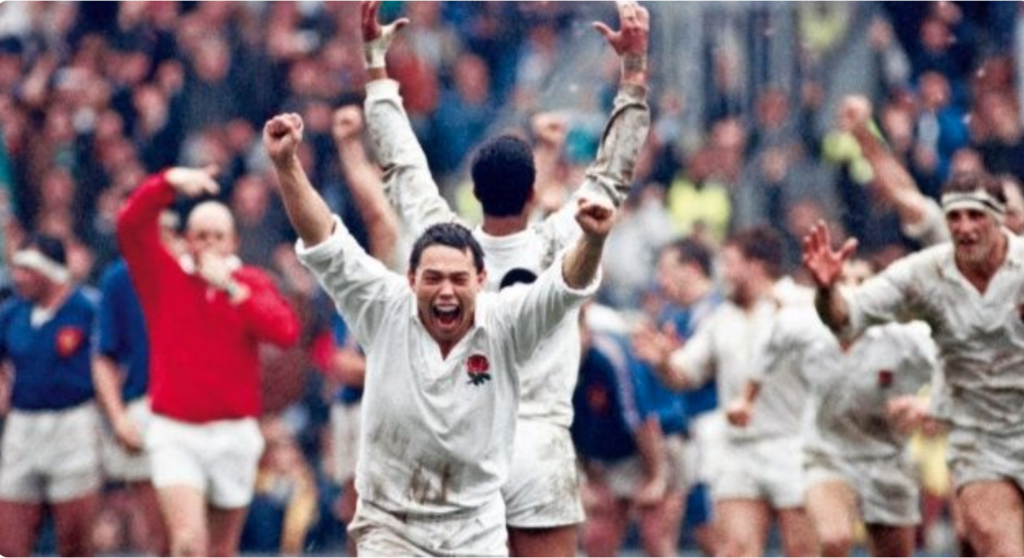
Rory Underwood celebrating with his England teammates
Discipline should not create a rigid organisation in which nobody thinks independently. It should create enough consistency for people to know what they can rely on, leaving them free to apply judgement where it genuinely adds value.
4. High-Performing Teams Develop Situational Awareness
Flying a fast jet requires more than operating the aircraft directly in front of you. A pilot must understand where other aircraft are, what is changing and how one decision may affect everyone else involved.
“Situational awareness is something that I very much am a big advocate of — the similarity between sport and the military, never mind business as well.” — Rory Underwood
The same principle applies at work. Situational awareness is the ability to notice what is changing, understand the consequences and adjust rather than follow yesterday’s approach by default. It requires people to look beyond the task immediately in front of them and consider what the wider situation now demands.
Their members anticipate how a change in one part of the organisation may affect colleagues, customers and other functions, even when they do not deal with those groups directly.
Leaders can encourage this awareness by sharing context, not only instructions. When people understand the wider situation, they are better equipped to anticipate problems, manage handovers and make decisions that support the whole organisation.
5. Balance Empowerment With Accountability
Empowerment is often presented as giving people greater freedom. Rory’s experience adds an essential second half: people also need to understand the responsibility that accompanies that freedom.
At 22, Rory was trusted to fly a Hawk alone at 250 feet and around 420 knots. The RAF gave him considerable authority, but he was equally clear about the standards he was expected to meet and the consequences of breaking them.
“You empower somebody, but they understand the accountability that goes with it, then you create a trusting environment.” — Rory Underwood
Empowerment without accountability can leave people unclear about boundaries, standards and ownership. Accountability without empowerment can produce dependence, delay and excessive management. Rory’s example suggests that trust grows when both sides are present: leaders provide appropriate authority and support, while individuals accept responsibility for their decisions and commitments.
For leaders, this means defining the outcome, the limits of the role, and what must be communicated when something changes. It also means resisting the urge to reclaim every decision once responsibility has been delegated. People can act confidently when they know what they own, what good performance looks like and when they need to ask for help.
In Summary
Rory Underwood’s experience across rugby, the RAF and business points to a more practical formula: create the environment first. Give people clear direction, establish dependable standards, build situational awareness, remove organisational drag and balance empowerment with accountability.
Good people do not become a high-performing team by accident. They become one when leaders create conditions that make aligned, consistent performance possible.
This article draws on Rory Underwood MBE’s conversation with Brij Thankey on Unfiltered with Brij.
Read the episode feature for more on Rory’s life in rugby, the RAF and business.
Watch the full episode on YouTube, or listen on Spotify and Amazon Music.
More conversations like this are available at brijthankey.com
Frequently Asked Questions
What makes a team high-performing?
A high-performing team combines capable people with clear direction, shared priorities, dependable standards and an environment that helps them work effectively together. Talent matters, but individual ability cannot compensate indefinitely for conflicting goals, poor communication or inconsistent leadership.
How do you build a high-performing team?
Start by clarifying where the organisation is going and how each person’s work contributes to that direction. Establish consistent expectations, help people understand what is happening beyond their own roles and remove the organisational friction that makes good performance harder than necessary.
Why is clarity important for team performance?
Clarity enables people to make decisions using the same priorities. Without it, departments and individuals can work extremely hard while pursuing different definitions of success, producing activity without collective progress.
Can talented employees underperform in the wrong environment?
Yes. Highly capable people can struggle when expectations are unclear, priorities conflict or organisational processes work against them. Before deciding that an individual is the problem, leaders should examine whether the environment enables that person to perform.
What role does discipline play in a high-performing team?
Discipline makes performance repeatable. It creates standards that do not depend on motivation or circumstances and includes communicating early when a commitment cannot be met. Over time, that consistency builds trust and gives people greater freedom to focus their judgement where it matters most.